
AI founder briefing: agent infrastructure, model-access risk, and Asia funding
A founder-focused scan of the June 11-18 AI industry window: OpenAI and Anthropic pushed enterprise distribution, Google and OpenAI advanced agent infrastructure, Anthropic's model-access shutdown exposed compliance risk, and Asia AI funding stayed active.

Vistazo a la investigación
Coverage window: June 11, 2026 through the morning of June 18, 2026, Pacific Time.
Three signals mattered more than the raw count of announcements: enterprise AI distribution is moving through partners and systems integrators, agent infrastructure is becoming a product category, and model-access risk has moved from theoretical compliance topic to live operational dependency.
Founder scan
| Signal | What happened | Founder/investor read-through |
|---|---|---|
| Enterprise distribution | OpenAI launched a Partner Network with a $150 million ecosystem commitment and a goal of enabling 300,000 certified consultants by the end of 2026. 1 Anthropic separately said TCS will roll Claude out to 50,000 employees across 56 countries and build Claude-powered products for regulated sectors. 2 | AI founders selling to the enterprise should assume implementation partners are becoming part of the buying motion, not a post-sale detail. Investors should separate model-layer demand from services-led deployment revenue. |
| Agent infrastructure | OpenAI said it will acquire Ona to add secure, persistent cloud environments for long-running Codex agents. 3 Google announced Agentic Resource Discovery, an open specification for publishing, discovering, and verifying AI tools, skills, and agents across the web. 4 | The next wedge is less about another chat surface and more about where agents run, what they can access, and how enterprises verify them before connection. |
| Model governance | Anthropic said a U.S. government directive forced it to suspend access to Fable 5 and Mythos 5 for all customers, while leaving other Anthropic models unaffected. 5 | Any product built tightly around a single frontier model now needs a commercial fallback plan, a customer communication plan, and a regulator-facing evidence trail. |
| Funding | Sarvam announced $234 million at a $1.5 billion valuation, with HCLTech leading a $150 million strategic investment tranche. 6 Respond.io raised $62.5 million and reported $35 million in ARR, 169% year-over-year growth, and a 30% profit margin. 7 | Capital is still available for AI companies with either sovereign infrastructure relevance or visible revenue mechanics. Thin wrapper risk remains, but local market depth and workflow ownership are getting funded. |
Enterprise AI is being packaged through partner channels
OpenAI's Partner Network is a distribution announcement as much as a partner announcement. The company says the program will help partners build, sell, and deliver AI solutions with OpenAI, supported by a $150 million investment and a certification goal of 300,000 consultants by year-end. 1 For founders, the practical read is that large customers may increasingly ask, "Who will implement this safely inside our stack?" before they ask, "Which model is best?"
Anthropic's TCS deal points in the same direction, but with a regulated-industry tilt. TCS plans to use Claude internally across engineering, finance, legal, marketing, and sales, then package Claude-based offerings for sectors including financial services, public services, life sciences, healthcare, aviation, telecom, and medical technology. 2 That makes services firms a channel, a systems layer, and sometimes a competitor to vertical AI startups.
The opportunity is clear: founders can draft behind trusted integrators if they have narrow workflow expertise and clean deployment controls. The risk is margin compression. If the buyer sees the AI layer as a component inside a consultant-led transformation, the startup has to prove it owns a hard-to-replace workflow, dataset, or compliance capability.
Agent infrastructure is moving from demos to trust plumbing
OpenAI's planned acquisition of Ona is a bet that persistent execution environments matter for Codex. OpenAI said Codex is used by more than 5 million people each week, up 400% from earlier in 2026, and that Ona has helped 2 million developers work in secure, reproducible cloud environments. 3 The stated target is long-running agent work that can continue for hours or days inside a customer-controlled environment.
Google's Agentic Resource Discovery specification attacks a neighboring problem: how agents find and verify tools, skills, and other agents. ARD uses catalogs published under an organization's domain and registries that index those catalogs, then passes along trust metadata so an agent can connect using the tool's native protocol. 4
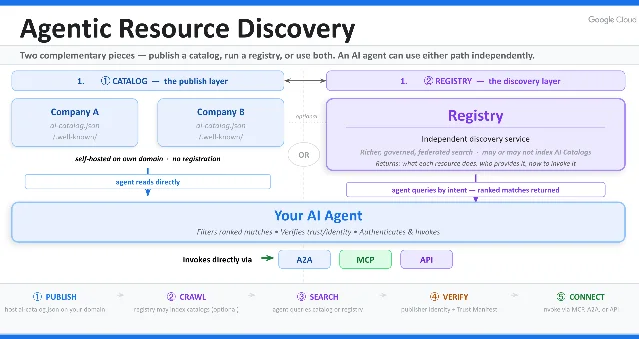
The shared message: agent products are becoming infrastructure products. The sellable unit is no longer just a smart assistant. It is a package of execution environment, permissions, logs, identity, verification, and rollback. Early-stage founders should decide where they sit in that chain. Owning one hard trust primitive may beat owning a broad but shallow agent app.
Model-access risk became an operating issue
Anthropic's Fable 5 and Mythos 5 shutdown is the week's risk event. Anthropic said the U.S. government directed it to suspend access to both models by any foreign national, including foreign national Anthropic employees, and that the practical effect was disabling both models for all customers. 5 The company said it disagreed that the cited narrow jailbreak concern justified recalling a commercial model, while acknowledging it was complying with the directive. 5
The Verge reported that Anthropic spent the weekend trying to reverse or explain the decision, and that the order could affect the broader trajectory of U.S. AI companies if it becomes a precedent for model recalls. 8 Treat that as a warning label rather than a forecast: the confirmed fact is the suspension; the longer-term policy pattern is still unresolved.
For founders, the action item is mundane but urgent. Map which customer-facing features depend on one frontier model, define acceptable degradation modes, and preserve logs showing why a given model was selected for a given risk tier. Investors diligencing AI application companies should ask for this dependency map before underwriting enterprise ARR.
Funding favored local depth and reliability claims
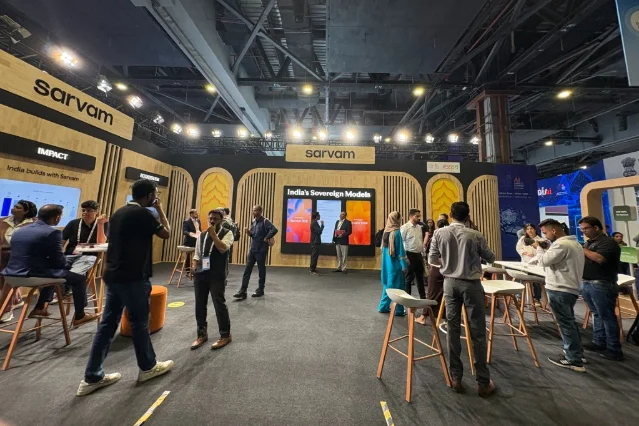
Sarvam's round is the largest financing signal in this scan. The company announced $234 million at a $1.5 billion valuation, said $150 million will come from HCLTech, and plans to fund next-generation models focused on agentic, coding, and cybersecurity applications. 6 Sarvam also said its conversational AI platform handles more than 2 million interactions a day and its inference platform processes roughly 10 million API calls daily. 6
Respond.io's $62.5 million Series B shows another fundable pattern: AI agents attached to a revenue workflow. The company says it processes 2 billion messages per quarter, charges by conversation volume rather than seat count, and serves businesses that sell through messaging channels such as WhatsApp, Instagram, TikTok, Line, Telegram, WeChat, voice calls, and web chat. 7
Probably raised $9 million in seed funding from Andreessen Horowitz for a data science tool that checks LLM outputs against a deterministic validator and produces citations plus an audit trail. 9 That is a smaller round, but the theme fits the week: buyers want AI systems that can explain and constrain their own work, especially in precision-sensitive use cases.
Compliance watch: external model evaluators are becoming a market
The European AI Office opened a call for experts to join a July 15, 2026 workshop on independence and qualification requirements for external evaluators of general-purpose AI models with systemic risk. Expressions of interest are due by June 21, 2026, and invitations are scheduled by July 7, 2026. 10
This is not just legal calendar housekeeping. If external evaluation requirements become more defined, a services and tooling market forms around model risk assessment, evidence collection, evaluator independence, red-team records, and compliance reporting. Founders building eval infrastructure should track this closely; founders building high-capability model products should assume evaluation artifacts will become part of enterprise procurement.
Monday actions
- Audit model concentration. List every production feature tied to one model provider and define a fallback that preserves the customer promise.
- Recheck the channel plan. If your enterprise motion relies only on direct sales, decide whether an integrator, consultant, or cloud marketplace partner can shorten trust-building.
- Package evidence, not claims. For agent products, prepare logs, permission scopes, evaluation records, and customer-controlled deployment options before the security review asks for them.
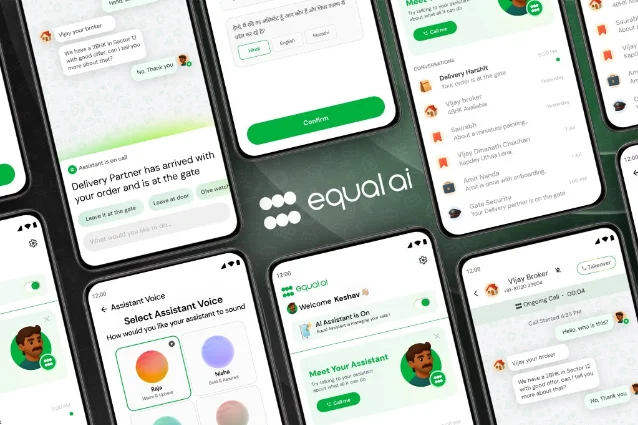
- Watch India and Southeast Asia. Sarvam, Equal AI, and Respond.io show that localized AI demand can support large rounds when the company owns distribution, language context, or workflow data. Equal AI raised $30 million for an Android call-screening assistant with more than 1 million monthly active users and support for more than 10 languages. 11
The week did not deliver a simple "new model wins" story. It showed the stack hardening around models: partner channels, persistent execution, verifiable tool discovery, external evaluation, and fallback planning. That is where a lot of founder work will sit next week.
Fuentes de referencia
- 1Introducing the OpenAI Partner Network
- 2TCS and Anthropic partner to bring Claude to regulated industries
- 3OpenAI to acquire Ona
- 4Announcing the Agentic Resource Discovery specification
- 5Statement on the US government directive to suspend access to Fable 5 and Mythos 5
- 6Sarvam becomes India’s newest AI unicorn with $234 million funding round led by HCLTech
- 7Malaysia’s AI agent-powered messaging app Respond.io raises $62.5M
- 8Inside the fight over Claude Mythos 5
- 9Probably raises $9M to build a more reliable kind of AI
- 10Call for participants: Workshop - qualification requirements for external evaluators of GPAI models with systemic risk
- 11Equal AI raises $30M to screen calls so Indians don’t have to
Añade más opiniones o contexto en torno a este contenido.