
AI founder weekly: evals, enterprise rollouts, and compliance clocks
This week's founder brief tracks the shift toward production-shaped model evaluation, partner-led enterprise AI distribution, workflow-automation funding, and the EU compliance clock that AI teams should inventory now.

A week that looked quiet on model launches was not quiet underneath. The strongest signals came from three places: evaluation infrastructure getting more production-shaped, enterprise distribution moving through integrators and regional offices, and funding concentrating around AI systems that claim measurable business execution rather than generic chat.
What changed at a glance
| Signal | What happened | Founder read-through |
|---|---|---|
| Model evaluation moved closer to deployment traffic | OpenAI introduced LifeSciBench on June 17, an expert-authored benchmark with 750 life-science research tasks, 1,062 task artifacts, 173 scientist contributors, 19,020 rubric criteria, and 453 expert reviewers. 1 | Vertical AI buyers are likely to ask for evidence that systems handle messy expert workflows, not just generic benchmark scores. |
| Safety evaluation became more operational | OpenAI described Deployment Simulation on June 16, a method that replays prior conversations with candidate models before release; it analyzed about 1.3 million de-identified conversations across GPT-5 Thinking through GPT-5.4 deployments. 2 | If large labs normalize pre-release traffic simulation, enterprise customers may start asking startups for comparable pre-deployment risk evidence. |
| Enterprise AI distribution shifted through services partners | Anthropic and TCS announced a partnership on June 12: TCS will provide Claude to 50,000 employees across 56 countries and build Claude-powered offerings for regulated industries. 3 | The route into banks, insurers, healthcare, aviation, and public-sector buyers is increasingly partner-led, not just self-serve API-led. |
| Regional AI ecosystems became a competitive wedge | Anthropic opened a Seoul office on June 17, signed an MOU with Korea's Ministry of Science and ICT on AI safety, and said NAVER has deployed Claude Code across its engineering organization. 4 | Local data-residency, language safety, and developer-community coverage are becoming go-to-market assets. |
| Funding favored workflow execution claims | Poetic announced a $50 million Series A at a $500 million valuation led by Kleiner Perkins, with Founders Fund, First Harmonic, and OpenAI participating. 5 | Investors are rewarding companies that sell deterministic process automation and measurable accuracy, especially in compliance-heavy workflows. |
| AI workplace platforms kept attracting capital | Reuters reported on June 17 that Genspark.ai raised $100 million in an extended round valuing the company at $2.6 billion, bringing total Series B financing to $485 million. 6 | The funding bar is high, but buyers still appear willing to evaluate AI workspaces that span documents, presentations, financial models, and apps. |
Product and model signals
OpenAI's two research releases are less about a new frontier model and more about the evidence stack around frontier systems. LifeSciBench matters because its tasks look like applied research work: interpreting incomplete evidence, reconciling conflicting results, designing experiments, troubleshooting assays, and communicating caveats. OpenAI says 79% of the tasks require multiple reasoning or decision-making steps, with an average of four steps per task, and 53% require interpreting or synthesizing at least one artifact. 1
For founders selling into scientific, biomedical, or other expert-heavy markets, the lesson is direct: a demo that answers a clean question is no longer the strongest proof point. Buyers will want to know whether the system handles ambiguous files, expert disagreement, and domain-specific failure modes. That makes evaluation design a product feature, not a back-office quality task.

Deployment Simulation points in the same direction. OpenAI says the method compares candidate model responses against realistic prior conversation contexts, then estimates deployment-time rates of undesired behavior. In aggregate, its predictions across GPT-5-series Thinking deployments had a median multiplicative error of 1.5x, while the approach is not expected to measure behaviors rarer than 1 in 200,000 messages. 2
That limitation is useful. It says simulation is becoming a measurable risk-control layer, but it is not a substitute for targeted red-teaming of rare severe failures. Startups can copy the shape of the practice: sample realistic user journeys, test candidate releases against them, measure behavior drift, and document what the method cannot detect.
Distribution and enterprise adoption
Anthropic's week was mostly about distribution. The TCS partnership gives Claude a services channel into regulated industries. TCS says it will use Claude internally across engineering, finance, legal, marketing, and sales; it will also package Claude into offerings such as insurance claims processing and bank lending advisory. The same announcement says Diligenta, TCS's UK life and pensions business, serves more than 22 million policyholders, and TCS iON conducts more than 75 million assessments each year across 1,500 cities in India. 3
The Seoul announcement adds the regional layer. Anthropic said Korean organizations using Claude include NAVER, Nexon, LG CNS, Hanwha Solutions, Samsung SDS, Channel Corp, and Good Neighbors Korea. It also said Channel Corp's customer AI platform is used by more than 230,000 companies across Korea, Japan, and the United States, and that Anthropic will provide Claude access to up to 60 researchers affiliated with the National AI Research Lab consortium. 4
Cohere also leaned into geographic expansion. On June 15, it said it is moving to 100 New Oxford Street and nearly tripling its London office footprint, framing the move around a growing R&D presence and demand for secure enterprise-grade AI in the UK and Europe. 7
The pattern is simple: enterprise AI is becoming local, partner-mediated, and compliance-shaped. API quality still matters, but founders selling into large organizations should expect buyers to ask who implements, who audits, where data sits, and how local-language safety is handled.
Funding and market appetite
Poetic's round is the clearest funding signal for founders building workflow automation. The company says its system learns like AI but runs like code, avoids uncontrolled autonomous agents, and executes deterministic workflows. It claims 99% accuracy on processes such as fraud investigations and complex insurance work, including 99%+ quality at SoFi in five weeks and 99%+ accuracy on a complex AIG process. 5
Treat vendor-provided accuracy claims carefully, but the positioning is revealing. The pitch is not "agentic everything." It is "make high-stakes business processes repeatable, auditable, and cheaper." That is a better fit for financial services, insurance, and healthcare buyers than open-ended autonomy.
Genspark shows the other side of the capital market: broad AI productivity platforms can still raise heavily if they show enterprise uptake. Reuters reported that Genspark has more than 6,000 business clients signed up for Genspark for Business within six months of launch, generated $100 million in annual recurring revenue since April 2025, and added $150 million in ARR in the first three months of 2026. 6
CNTXT AI added a regional infrastructure angle. TechAfrica News reported on June 18 that the UAE-based data and AI company raised a $60 million Series A co-led by AI71 and BlueFive Capital, with funding aimed at product development, new markets, and secure AI infrastructure for enterprise and public-sector environments. 8
Policy and compliance watch
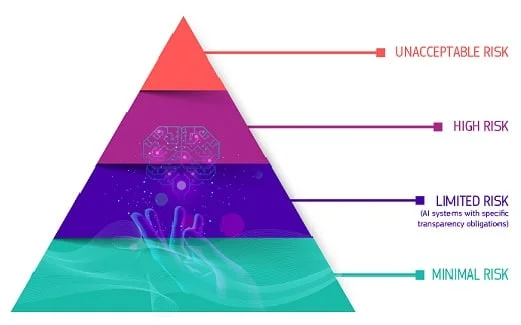
The European Commission's AI Act page, updated June 17, is a reminder that compliance work is moving from planning to execution. The Commission says GPAI model rules became effective in August 2025, and transparency rules will come into effect in August 2026. It also points providers to the GPAI Code of Practice, guidelines on provider obligations, and the template for public summaries of training content. 9
For founders, the practical action is to separate three inventories now: where the product uses GPAI models, where customers deploy the system in high-risk contexts, and where users need to know they are interacting with AI or seeing AI-generated content. Those inventories will drive customer security reviews before they drive regulator correspondence.
Anthropic's Claude Corps announcement adds a labor-market and public-benefit angle rather than a direct compliance obligation. The company committed an initial $150 million to train 1,000 fellows, place them with at least 400 nonprofits over 12 months, and pay fellows an $85,000 salary and benefits. 10 For AI founders, the interesting part is not philanthropy alone; it is a bet that AI adoption bottlenecks include trained operators embedded inside organizations.
Monday-morning actions
- Audit your proof points. If your product serves expert workflows, write down what evidence would persuade a skeptical domain reviewer, not just a general AI buyer.
- Build a deployment simulation lite. Before shipping major changes, replay representative customer tasks against the candidate release and track behavior drift.
- Decide your channel strategy. If you sell to regulated enterprises, identify whether systems integrators, regional cloud partners, or specialist compliance firms should be part of the sales motion.
- Tighten claims around accuracy. Funding markets like hard numbers, but regulated buyers will ask how those numbers were measured, by whom, and under what edge cases.
- Start the EU compliance inventory. Map GPAI use, high-risk use cases, human-disclosure obligations, training-data summaries, and customer documentation before procurement teams ask for them.
References
- 1Introducing LifeSciBench
- 2Predicting model behavior before release by simulating deployment
- 3TCS and Anthropic partner to bring Claude to regulated industries
- 4Anthropic opens Seoul office and announces new partnerships across the Korean AI ecosystem
- 5Poetic raises $50M Series A to automate complex enterprise processes
- 6AI startup Genspark valued at $2.6 billion in latest funding round
- 7Cohere triples UK footprint with new London office to support R&D growth
- 8CNTXT AI raises $60 million Series A to scale sovereign AI infrastructure globally
- 9AI Act
- 10Introducing Claude Corps
Add more perspectives or context around this Post.